Tuberculosis (TB) continues to pose a significant health challenge in Indonesia. Many cases go undetected, and gaps in treatment mean the country needs a stronger, evidence-based national strategy to eliminate the disease.
Indonesia has historically struggled with high rates of TB, which remains one of the country's most serious public health concerns. In 2025, it is estimated that more than 1 million people were diagnosed with TB, with approximately 134 000 deaths each year. Detecting cases early and ensuring patients complete treatment have been persistent obstacles to controlling the disease's spread.
To address these challenges, the World Health Organization (WHO) supported Indonesia in completing a tuberculosis epidemiological review in May 2025, followed by a National TB Programme Review in August 2025. These reviews assessed the country’s TB burden, trends, surveillance performance and progress across the care continuum. Both reviews identified priority actions such as improving people-centred services and strengthening health system support.
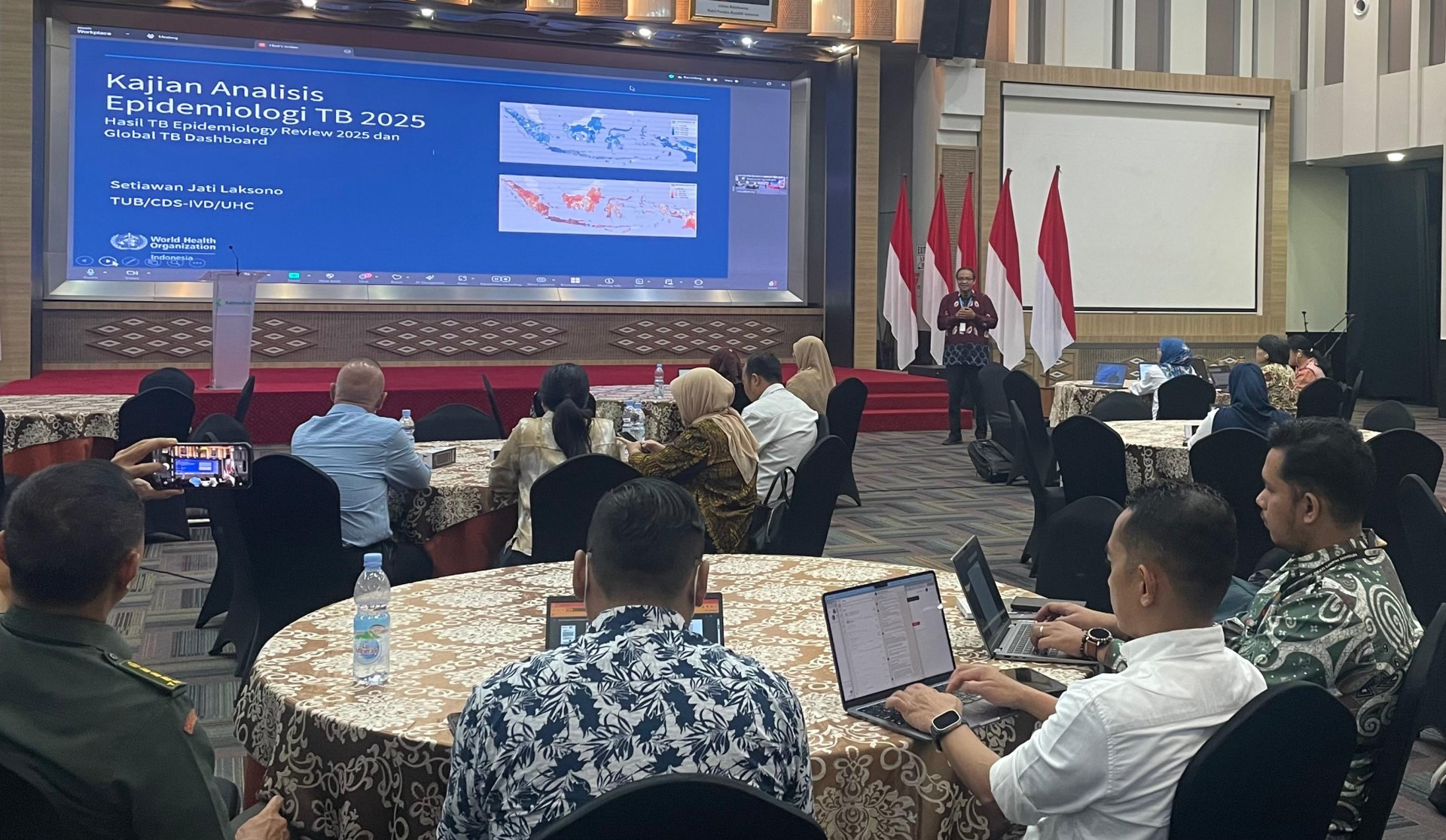 WHO presented the epidemiological analysis at first stakeholders consultation meeting convened by the Ministry of Health in Jakarta on 31 July–1 August 2025. Credit: WHO/Yoana Anandita
The findings from these reviews were discussed at the Stakeholders Consultation Meeting, convened by the Ministry of Health in Jakarta on 31 July to 1 August 2025. Nearly 200 participants attended, representing government agencies, civil society organizations, professional associations, communities affected by tuberculosis and development partners. Using a people-centred framework, attendees identified priority gaps, explored root causes and clarified the roles different stakeholders should play in addressing the problem.
These inputs informed the development of Indonesia's National Strategic Plan for Tuberculosis 2026–2030. From August to November 2025, WHO, the World Bank and other partners supported a structured, participatory drafting process. A draft final strategic plan is now available for further alignment and will be released by the Ministry of Health.
Anchoring the strategic plan in evidence and partnerships helps Indonesia prioritize interventions with the greatest impact, align investments and strengthen collaboration at all levels. This approach supports the country’s efforts to accelerate progress and move closer to its vision of eliminating TB.
This activity is supported by the Gates Foundation and the Global Fund.
Written by Yoana Anandita, National Consultant (TB), and Maria Regina Christian, National Professional Officer (TB), WHO Indonesia.